
Biography
Currently, Lingyu Li is a Post-doctoral Fellow at the University of Hong Kong, where she collaborates with Prof. Yuanhua Huang on Bioinformatics. She received her Ph.D. at Shandong University, supervised by Prof. Zhi-Ping Liu. Additionally, She was a joint training Ph.D. student at the University of Hong Kong, supervised by Prof. Wai-Ki Ching.
Interests
- Bioinformatics
- Machine Learning
- Biomarker Discovery
- Spatial Transcriptomics
- Single-cell Data Science
- Sparse Statistical Learning
Education
-
PhD in Biomedical Engineering, 2019-2023
Shandong University
-
MSc in Computational Mathematics, 2016-2019
Shandong Normal University
-
BSc in Aplied Mathematics, 2012-2016
Shandong Normal University
Skills
R
90%
Python
80%
Statistics
100%
Experiences
Post-doctoral Fellow in Bioinformatics
Research project:
- Multimodal AI decoding tumor-immune interaction by fusing spatial RNA-seq and histological images
PhD in Biomedical Engineering
Doctoral thesis title:
- Biomarker discovery methods based on connected network regularized feature selection
Joint training PhD in Computational Biology
Research project:
- Bioinformatics and optimization with applications in biomarker discovery and feature selection
Master of Computational Mathematics
Master thesis:
- Numerical methods and theoretical analysis of a class of groundwater pollution problems
Bachelor of Mathematics and Applied Mathematics
Bachelor thesis:
- Uniform convergence of function term series and its applications





Publications
Quickly discover relevant content by filtering publications.
(2026).
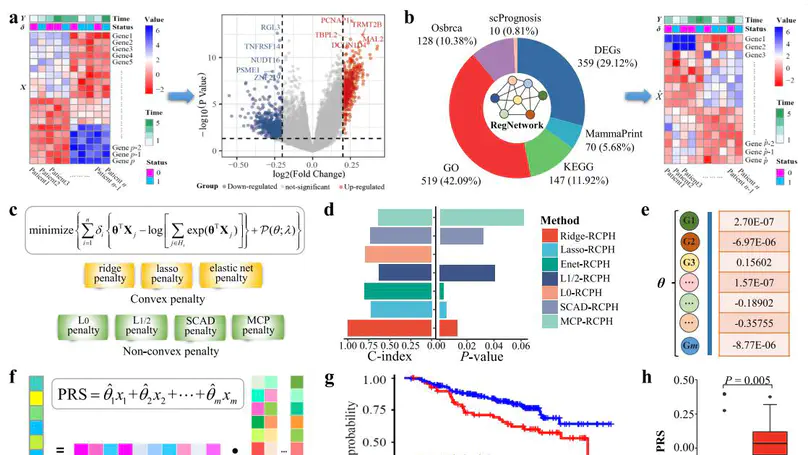
Prognostic biomarker discovery via a connected network-constrained Cox proportional hazards model .
In BRIEF BIOINFORM.
(2026).
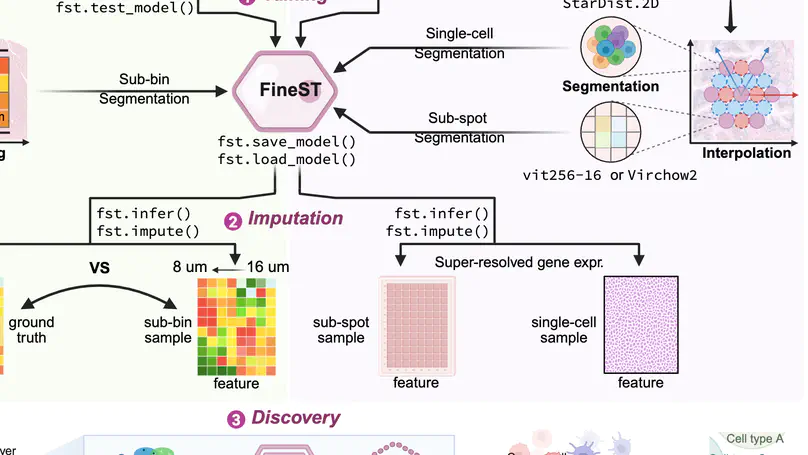
FineST: Contrastive learning integrates histology and spatial transcriptomics for nuclei-resolved ligand-receptor analysis.
In NAT COMMUN.
(2026).
SparseAEH: Scalable autoregressive expression histology discovery in spatial transcriptomics via sparse Gaussian kernels.
In BioRxiv.
(2025).
getDNB: identifying dynamic network biomarkers from time-varying gene regulations utilizing graph embedding techniques.
In BRIEF BIOINFORM.
(2025).
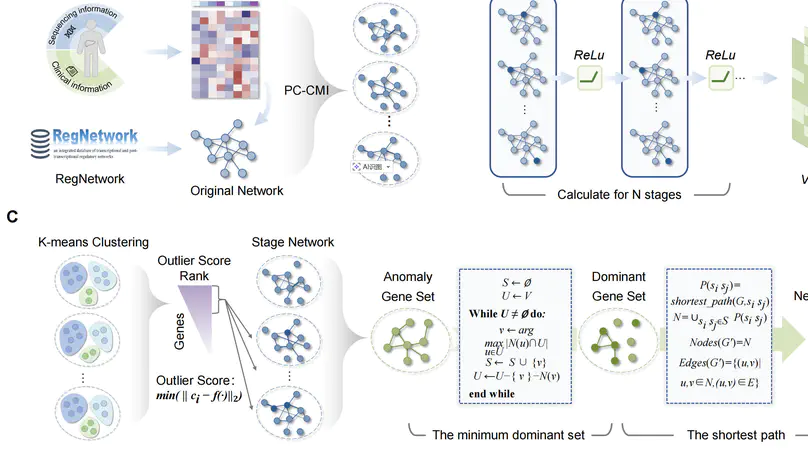
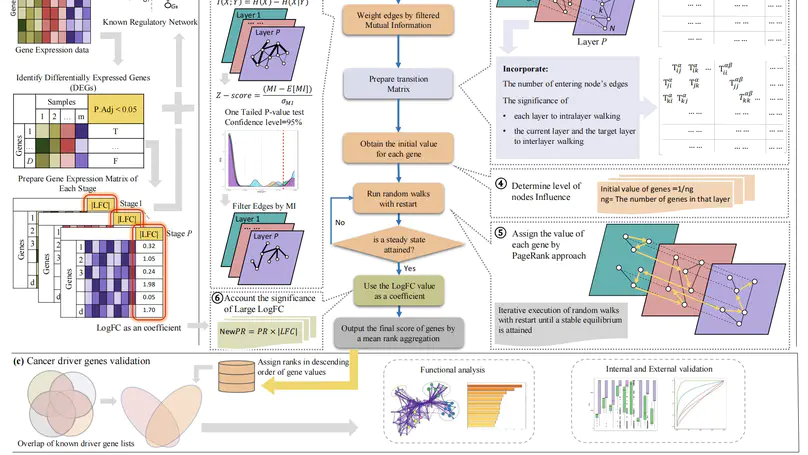
NetWalkRank: Cancer driver gene prioritization in multiplex gene regulatory networks by a random walk approach.
In IEEE ACM T COMPUT BI.
(2023).
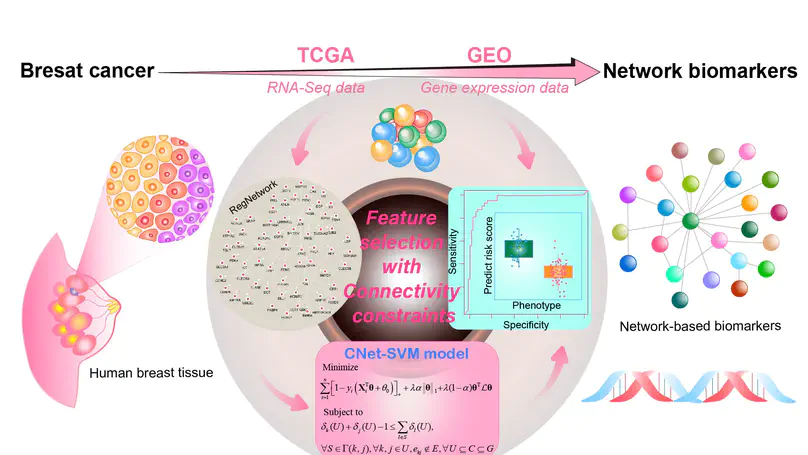
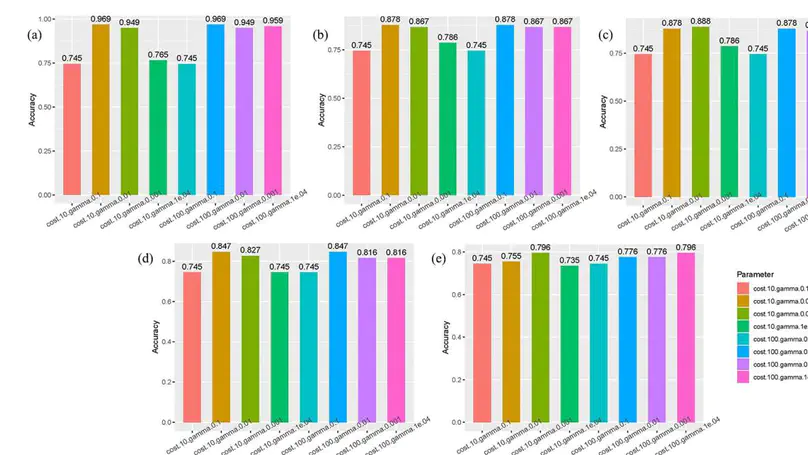
Biomarker discovery from high-throughput data by connected network-constrained support vector machine.
In EXPERT SYST APPL.
(2023).
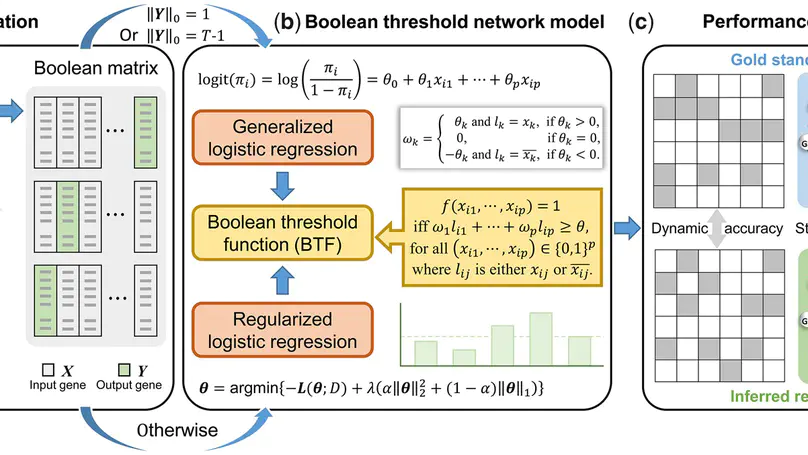
LogBTF: gene regulatory network inference using Boolean threshold network model from single-cell gene expression data .
In BIOINFORMATICS.
(2023).
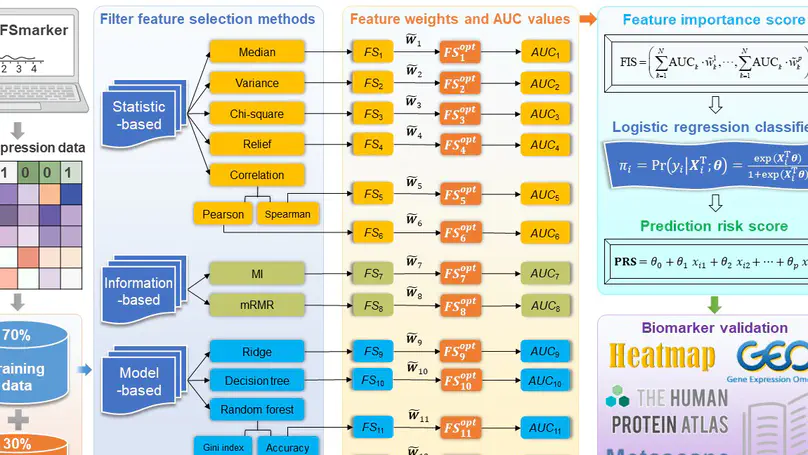
Identifying diagnostic biomarkers of breast cancer based on gene expression data and ensemble feature selection.
In CURR BIOINFORM.
(2022).
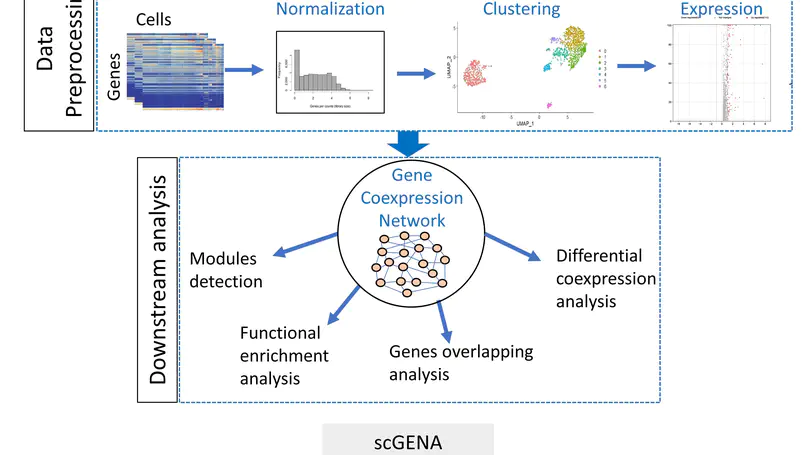
scGENA: A single-cell gene coexpression network analysis framework for clustering cell types and revealing biological mechanisms.
In Bioengineering.
(2022).
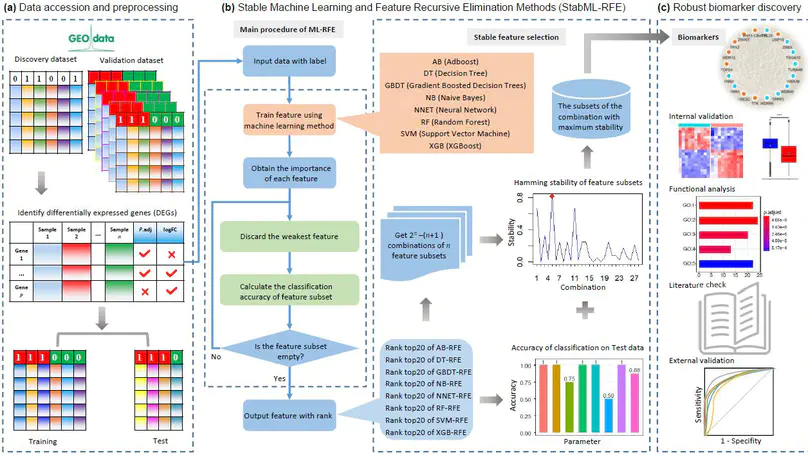
Robust biomarker screening from gene expression data by stable machine learning-recursive feature elimination methods.
In COMPUT BIOL CHEM.
(2022).
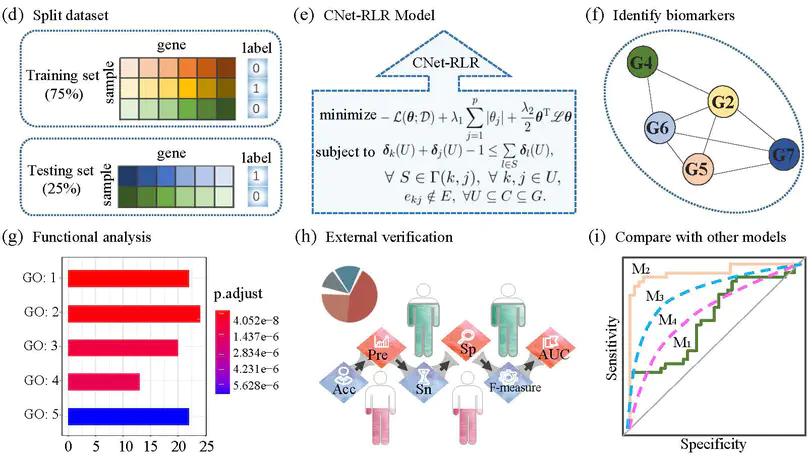
A connected network-regularized logistic regression model for feature selection.
In APPL INTELL.
(2021).
Detecting prognostic biomarkers of breast cancer by regularized Cox proportional hazards models.
In J TRANSL MED.
(2021).
Discovery of spontaneous preterm birth biomarkers based on machine learning.
In Journal of Nanjing University(Natural Sciences).
(2020).
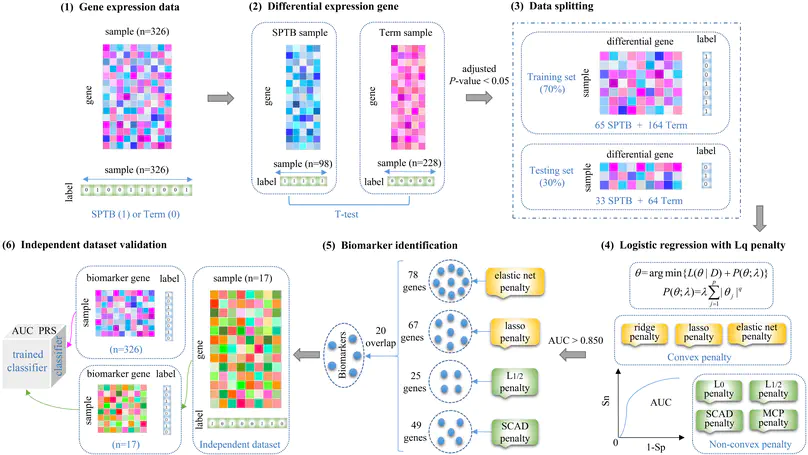
Biomarker discovery for predicting spontaneous preterm birth from gene expression data by regularized logistic regression.
In COMPUT STRUCT BIOTEC.
(2020).
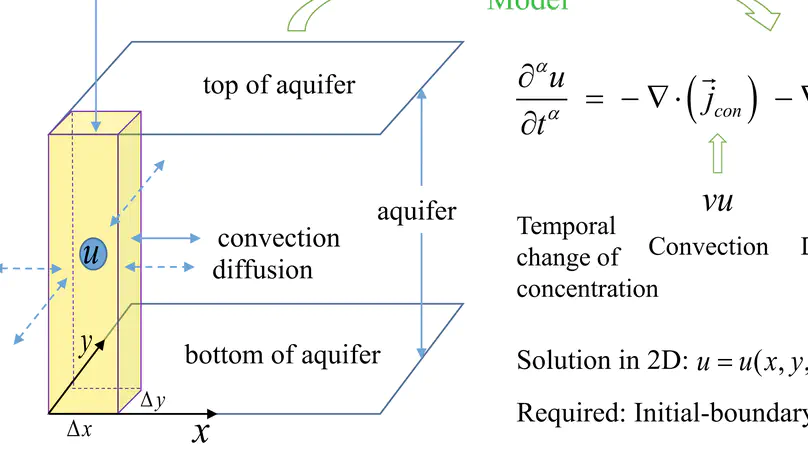
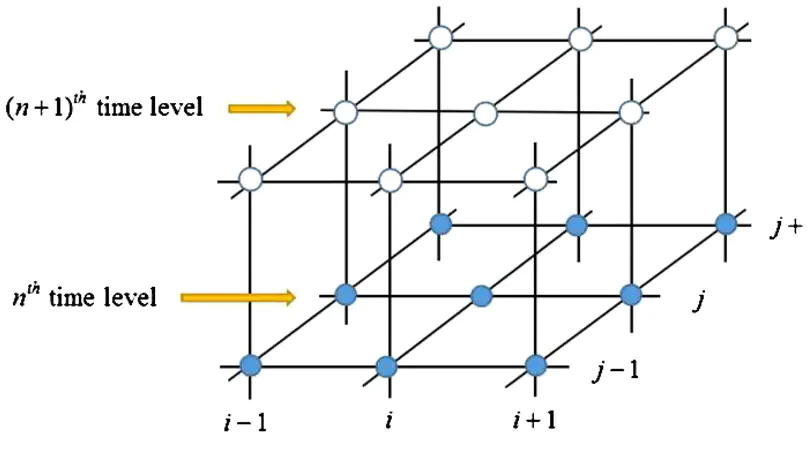
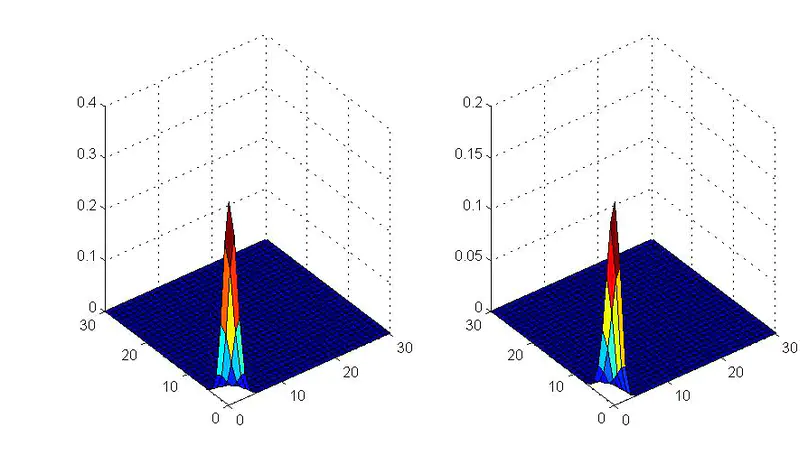
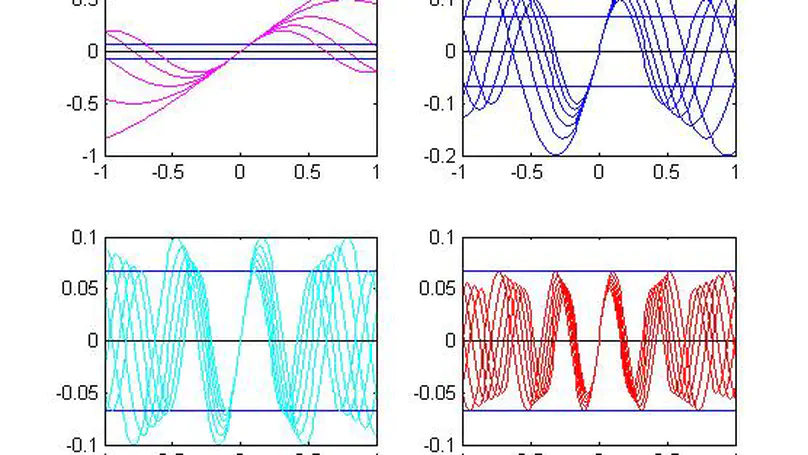
Compact finite-difference method for 2D time-fractional convection–diffusion equation of groundwater pollution problems.
In COMPUT APPL MATH.
(2018).
Fourth-order compact finite difference method for solving two-dimensional convection–diffusion equation.
In ADV DIFFER EQU-NY.
(2017).
Numerical simulation of groundwater pollution problems based on convection diffusion equation.
In AJCM.
(2016).
Uniform convergence and application of function term's series.
In Journal of Shandong Normal University (Natural Science).
Paper Overview
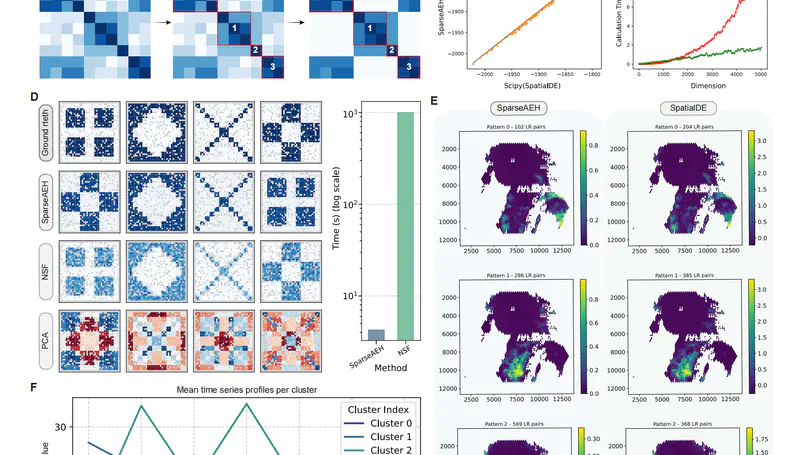
In this work, we present SparseAEH, an EM-algorithm-based method for spatial pattern identification.
Projects






Contact
- sdnully2012@163.com, lingyuli@hku.hk
- (+86)18366138024, (+852)59186312
- Room 1-05, 5 Sassoon Road, Hong Kong SAR,
- Jockey Club Interdisciplinary Research Building
-
Monday - Friday 09:00 to 19:00
Saturday - Sunday 10:00 to 17:00